How to Read a Headline: A Practical News Literacy Guide
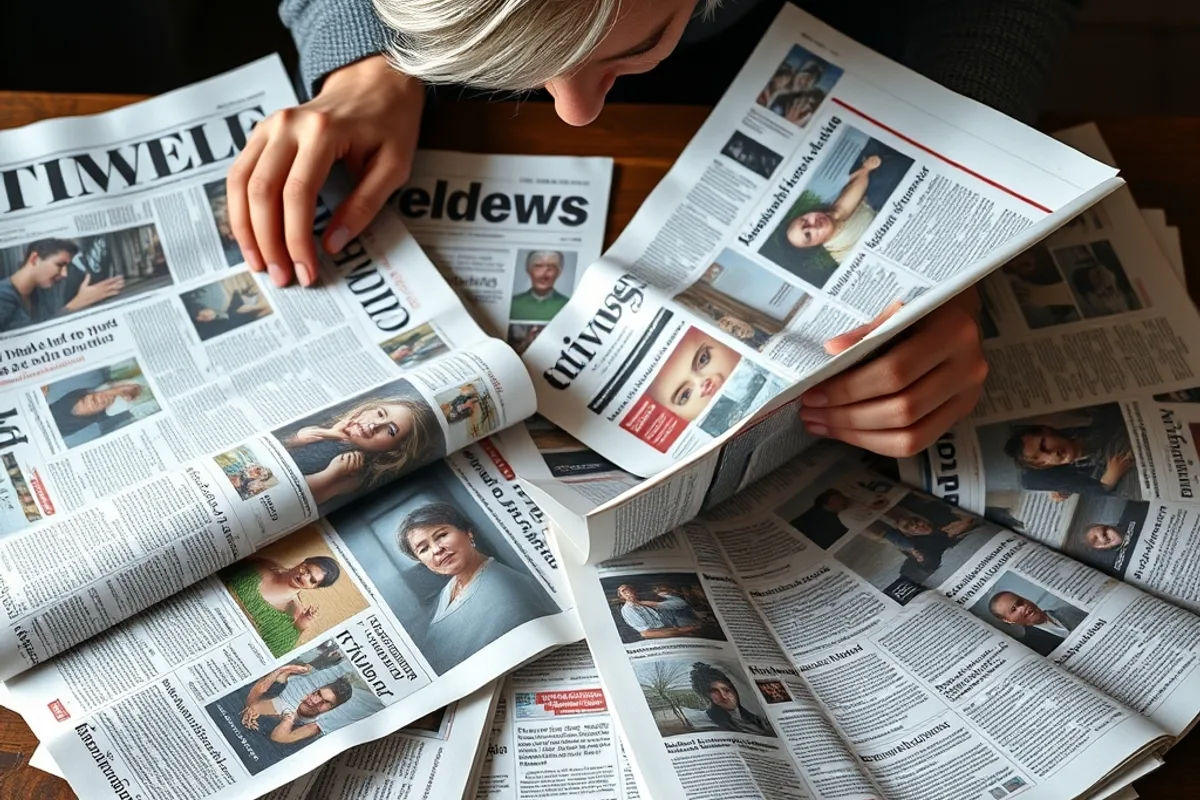
Most people do not read the news so much as scan it. A headline appears in a feed or a notification, and within a second the reader has formed an impression. Newsrooms know this, which is why headlines are written to stop the scroll rather than to summarise the story accurately. That is not always dishonest, but it is always compression, and compression loses information.
News literacy is not a secret skill. It is a set of questions applied consistently. The questions are simple enough to use in a few seconds, and they work across platforms, languages and political leanings. The goal is not to become cynical about everything. It is to distinguish between stories that deserve trust and stories that need more work.
Ask what the headline promises
A headline often implies a causal claim: something caused something else, a trend is accelerating, a group is to blame. The first question is whether the article actually supports that claim. Read the first few paragraphs and look for the evidence. If the headline says a policy "failed", does the story define success? If it says a product "exploded in popularity", is there a number, and compared with what?
Pay attention to verbs. "May", "could" and "linked to" are weaker than "will", "caused" and "proves". A headline that uses a strong verb but a body that uses cautious language is a warning sign. So is a headline that asks a question. Questions attract clicks because they create uncertainty, but they also allow the publisher to avoid making a claim it cannot defend.
The headline is not the story. If a headline makes you angry or frightened, that is precisely the moment to slow down and read the body. Strong emotion is a signal to check, not a substitute for evidence.
Look for the source behind the source
Good reporting names its sources and explains how they know what they know. A study is not a source by itself; the quality of the study matters. A government statement is not a fact; it is a claim by an interested party. An anonymous source can be legitimate, but the reader should be told why anonymity was granted and what the source's position is.
Watch for the difference between a primary document and a summary of it. A press release, a preprint and a peer-reviewed paper are not equivalent. A single study is rarely the final word, especially in health and social science. If a story rests on one study, look for whether other researchers have commented or whether the effect size is meaningful.
Also check the date. Old stories recirculate constantly, sometimes with new headlines that make them look current. A screenshot can strip away the date, the outlet and the context. Before reacting, find the original and check when it was published.
Spot the missing context
Every story selects. The question is what the selection excludes. A crime story may report one incident without the trend. A budget story may quote a total without the inflation adjustment. A poll may report a lead without the margin of error or the sample size.
Common omissions include base rates, comparison groups and definitions. If a headline says something has "doubled", ask doubled from what. If it says a group is "more likely", ask more likely than whom. If it says a policy is "popular", ask among whom and how the question was worded.
False balance is another pattern. Presenting two sides as equally supported when the evidence is lopsided can mislead as effectively as outright bias. Good journalism reports what is known, what is disputed and why. It does not manufacture symmetry for the sake of appearance.
Check the incentives
Every outlet has incentives: attention, advertising, subscriptions, political access or ideological alignment. That does not make its reporting false, but it shapes what gets covered and how. Ask who benefits from the framing. Ask what the outlet is selling. Ask whether the story would survive if the click incentive disappeared.
Social platforms add their own incentives. Posts that provoke strong reactions travel further, regardless of accuracy. A lurid claim from a small account can outperform a careful report from a professional newsroom. The algorithm does not know the difference, so the reader has to.
Institutional trust is not binary. A publication can be reliable on courts and unreliable on celebrity gossip, or strong on local government and weak on foreign affairs. Judge the work, not just the logo.

A five-question habit
You do not need a checklist for every headline. But when a story matters, these five questions cover most of the ground:
- What is the claim? State it in one sentence without the emotion.
- Who says so? Find the source and consider its interest.
- What is the evidence? Look for numbers, documents or named witnesses.
- What is missing? Ask about comparison, timeframe and definitions.
- What would change my mind? If nothing could, you are not reading, you are confirming.
These questions are not a cure for misinformation, but they slow the reflex long enough for judgement to catch up. That is most of the battle.
Why this matters
News literacy is not about distrusting everything. It is about allocating trust carefully. A reader who checks sources, notices framing and reads past the headline is harder to manipulate and better equipped to participate in public life. That is valuable regardless of political affiliation.
The UNESCO media literacy programme makes a similar point: the goal is not to memorise facts but to build habits of verification. Habits scale. Facts expire.
The next time a headline grabs you, give it ten seconds. Ask what it promises, who benefits and what is missing. Most stories will survive the scrutiny. The ones that do not were probably not worth your attention in the first place.
A headline is a promise. Your job is to check whether the article keeps it.Chauncey Apuzzi Editorial
We cross-check every claim against primary documents and independent reporting. Where a story depends on public records or official data, we link to the source so you can verify the numbers yourself.