
Environmental Sustainability: What Is This Green Stuff And Why Should I Care?
Introduction
In this day and age, everything is about being green. It’s hard to find a product or service that doesn’t have some sort of green label on it. What do all these “green” labels mean? Are they just buzzwords used by marketing departments to sell products? Or are they really as good as they say? Well, in today’s blog post I’m going to take a deep dive into sustainability and explain why being environmentally sustainable is important for everyone — from governments to businesses to individuals.
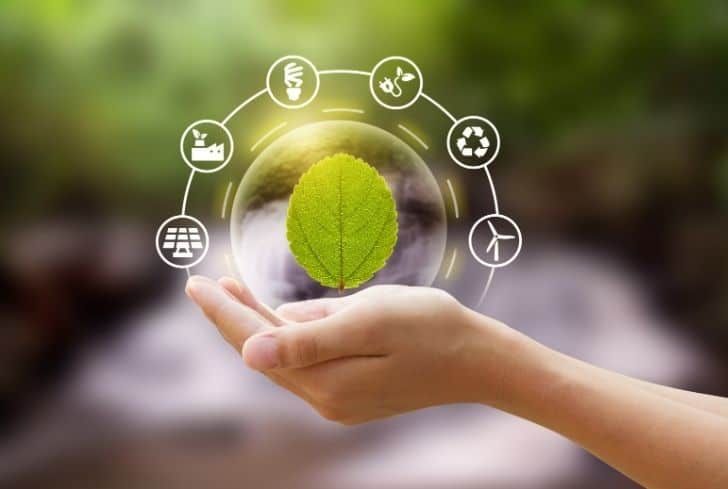
The United Nations defines sustainable development as “. . .meeting the needs of the present without compromising the ability of future generations to meet their own needs. [It] meets the needs of the present without compromising the ability of future generations to meet their own needs.”
The United Nations defines sustainable development as “. . .meeting the needs of the present without compromising the ability of future generations to meet their own needs. [It] meets the needs of the present without compromising the ability of future generations to meet their own needs.”
This is an important concept for businesses to understand, because it means that companies must consider how their practices affect people and communities in addition to profits. For example, if a company were looking for a way to increase its profits by cutting corners on safety regulations, that might be good for short-term profits but bad for long-term sustainability–and potentially disastrous for human health and safety!
Sustainable Business Practices
Sustainable business practices are good for the environment, employees, customers and investors. Sustainable business practices are also good for society as a whole because they help reduce pollution and wastefulness, which in turn helps protect our natural resources for future generations.
Sustainability is not just about thinking about what you can do now to make your company more environmentally friendly; it’s also about planning ahead so that your company will be around long enough to reap the benefits of those efforts in years to come.
The term “sustainable development” was coined in 1972 by a graduate student named Patrick Wright in a thesis titled, “A Strategy for Survival.” He was looking at economic systems that would lead to an improved quality of life for all people, present and future.
In 1972, a graduate student named Patrick Wright coined the term “sustainable development” in his thesis titled, “A Strategy for Survival.” He was looking at economic systems that would lead to an improved quality of life for all people, present and future.
In 1987, the Brundtland Commission published its report Our Common Future (often referred to as The Brundtland Report). This document defined sustainable development as: ” meeting the needs of the present without compromising the ability of future generations to meet their own needs.”
There are several definitions for sustainable business practices, but all incorporate three basic concepts: environmental stewardship, social responsibility and economic viability.
Sustainable business practices are practices that are good for the environment and good for the economy. Sustainable business practices also help society by supporting social responsibility.
There are several definitions for sustainable business practices, but all incorporate three basic concepts: environmental stewardship, social responsibility and economic viability.
These three elements are critical to any business because they involve the key stakeholders — employees, customers, investors and communities.
The three elements of sustainability are environmental stewardship, social responsibility and economic viability. These are the key stakeholders in any business and all three need to be involved in the decision-making process. Social responsibility is the most important element of all three because it impacts all stakeholders; it’s also what makes companies stand out from their competitors.
If everyone uses green products it will make our world better!
You can help by reducing, reusing and recycling.
- Reduce: Avoid waste by using less energy and water, buying local products and using energy efficient products.
- Reuse: Recycle paper, plastics, glass bottles and aluminum cans.
- Recycle: If something cannot be reused or recycled it should be disposed of in an environmentally friendly way such as composting or incinerating.
Conclusion
So, what does this all mean? Sustainable business practices are important because they protect our environment and create a better world for everyone. They can lead to long-term economic growth and job creation, as well as improve the quality of life for everyone involved in the process – employees, customers and communities alike!