
Transforming the Workforce in the 21st Century
Introduction
When you think of the workforce in the 21st Century, what do you see? Are people still sitting in offices, working 9-5 and following a linear career path? Or are we entering a new era of remote workers and gig economy entrepreneurs? This article will explore six of the most important trends transforming our workplaces today and how these changes can affect your business.
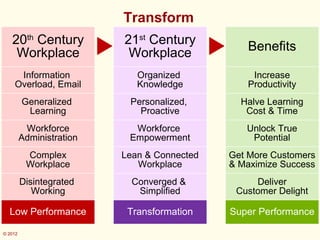
6 Trends Changing the Workforce
There are six major trends that are changing the workforce. These are:
- A diverse workforce. More and more people of different genders, races and ethnicities are entering the labor force, bringing with them different experiences and perspectives. As a result, managers must be able to work across teams in order to get things done effectively–something that can be difficult if your team members aren’t all on the same page when it comes to how they communicate or collaborate with one another.
- Increasing mobility within organizations due to remote working options like telecommuting or flexible hours for workers who need flexibility in their schedules (like parents). This can make it challenging for managers who want consistency from employees but don’t want their expectations too high because then no one would meet those expectations anyway! So how do we get around this problem? Well…
The end of the traditional workspace
The workplace of the future is a mobile, flexible and collaborative environment. For example, at IBM we are transforming our workforce with telework programs that enable employees to work from home or remotely. This allows them more time at home with their families as well as increased flexibility in their schedules so they can attend school functions or volunteer opportunities without having to worry about missing work hours.
In addition to encouraging employees who work from home or remotely, we also offer an online collaboration platform called Connections where teams can share files, chat about projects and collaborate on documents together–all while remaining connected through video conferencing technology such as Skype for Business and Google Hangouts (which was recently acquired by Alphabet).
A shift from linear to circular organizations
A linear organization is hierarchical, top-down. It’s good for production, but not so much for innovation. A circular organization is flat and horizontal–more like a circle than an arrow pointing to the top. Circular organizations are good at innovation (and creative thinking), but not so much at production (or efficiency).
The rise of the millennial worker
Millennials are the largest generation in the workforce and the most diverse, with a wide range of backgrounds, experiences, and interests. They’re also far more likely than baby boomers or Gen Xers to be mobile workers: 36 percent of millennials work remotely at least some of the time; only 24 percent of baby boomers do so (and just 17 percent for Gen Xers). This mobility has allowed them greater flexibility in where they live–a boon for those who wish to pursue careers outside major cities–as well as an opportunity to balance their professional lives with personal ones more easily than previous generations could manage.
Millennials’ tech savvy means that many companies will have no choice but to adapt their business practices if they hope attract top talent; employees raised on social media aren’t going away anytime soon! In fact, many businesses have already begun changing their hiring processes because of these changes. For example, some companies now require potential hires not only submit resumes but also create short videos showcasing themselves through various channels such as LinkedIn or YouTube; others ask applicants what questions might be asked during an interview so they can prepare answers beforehand (i)
The rise of the remote worker
- The rise of the remote worker is a global trend.
- Remote workers are more productive, and they are happier.
- They’re also more flexible, which means they can be cheaper for companies to hire.
- Remote workers can have a better work/life balance than their in-office counterparts as well because they don’t have to commute or deal with office politics.
The rise of platform capitalism and gig economy
Platform capitalism is a new economic model that emerged in the mid-2000s. It builds on the foundation of digital platforms, which have been around since the 1960s, but it also encompasses other elements like crowdfunding, crowdworking and sharing economy businesses such as Uber.
Platform capitalism relies on information technology to connect buyers with sellers through a platform that manages payments, delivery and ratings for both parties. The role played by platforms can vary widely depending on their purpose: some focus exclusively on connecting people looking for work with employers who need services performed (a traditional staffing agency); others facilitate peer-to-peer transactions between individual buyers and sellers (eBay); still others connect groups of users with shared interests (Facebook). In each case though there are two common traits: 1) an intermediary third party who manages all aspects of these interactions 2) digital tools used throughout so everything runs smoothly from start to finish
The workforce is changing, so you need to change too.
As technology changes and the workforce evolves, you need to be able to adapt. You need to be able to embrace new technology, work in a more collaborative way, and even work remotely if necessary.
- Adaptability: The world is changing rapidly. If you don’t stay on top of it by being able to adapt your skillset quickly enough then someone else will come along and take your job (or at least make sure that whatever industry you’re in becomes obsolete).
- Collaboration: In order for businesses (and individuals) to succeed today they must collaborate with others outside their organization or industry–this could mean working on projects with customers or suppliers; sharing information via social media platforms like Twitter/Facebook/Instagram etc.; connecting through LinkedIn groups etc..
Conclusion
We’ve just touched the surface of what’s happening in the workforce. There are countless other trends that will impact your business and how you approach recruitment and retention. But as we’ve seen, it’s important not just to keep up with these changes but also lead them by innovating in new ways.