
Workplace Augmentation Strategies for Meeting Business Goals
Introduction
If you’re a business owner or manager, you probably have a list of goals and objectives that you want to achieve. If you don’t, then it’s time to sit down and write them out. Whether you want to increase revenue, improve customer satisfaction scores or boost employee productivity—or all three—there are ways to use automation technology to meet these goals and your business will be better off for it. This article will help you select the right tools for your company’s needs by outlining how artificial intelligence (AI) can improve employee efficiency in any industry.
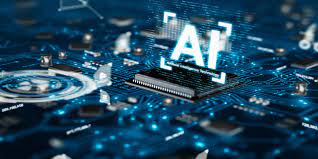
Augmentation is the process of using artificial intelligence (AI) to help humans work smarter, not harder.
Augmentation is the process of using artificial intelligence (AI) to help humans work smarter, not harder. It’s a way to take your employees’ existing skills and knowledge and combine them with an AI system that has been trained on a large quantity of data from your industry or field. This combination allows for better decision making, increased productivity and creativity–key factors in meeting business goals.
Machine learning and deep learning are two tools that can be used to augment the human workforce.
Machine learning and deep learning are two tools that can be used to augment the human workforce.
Machine learning is a subset of artificial intelligence, which refers to giving computers the ability to learn without being explicitly programmed. It’s based on algorithms that allow computers to make decisions based on past experiences and data analysis rather than being told exactly how to act in every situation. Deep learning is one type of machine learning–it’s based on neural networks (networks of connected neurons), which help computers process information more like humans do by recognizing patterns and making connections between things that might not seem related at first glance (like identifying objects in images).
AI can also improve business processes by anticipating what actions an employee might need next.
AI can also improve business processes by anticipating what actions an employee might need next.
For example, if you’re using a chatbot to help customers solve their problems, the AI will be able to predict what questions they are going to ask next and provide them with suggestions on how best to proceed.
This is particularly useful for workers who interact with customers frequently or have complex workflows that require multiple steps (such as technical support).
Augmentation can reduce errors by automating tasks that would otherwise be done by people who may make mistakes.
A common example of augmentation is using AI to automate tasks that would otherwise be done by people who may make mistakes. For example, if you have an employee who has worked for your company for 20 years and knows the ins and outs of its processes, but also has a tendency to make mistakes because he or she lacks focus on some minor details–you could use AI to help fill in those gaps.
If you were able to reduce errors like these by 50{b863a6bd8bb7bf417a957882dff2e3099fc2d2367da3e445e0ec93769bd9401c} or more (and in many cases even higher), then this would mean significant cost savings for your organization. Even if it costs a few hundred dollars per year per person saved from making an error due to lack of attention, this could easily amount to tens or even hundreds of thousands over time!
Artificial intelligence offers more ways to automate tasks while making the workforce more efficient and effective at meeting business goals.
Artificial intelligence (AI) is a tool that can help automate tasks and improve business processes. AI technology allows computers to learn from experience and improve their performance at tasks over time.
AI is designed to mimic human behavior by making decisions based on data, such as historical information or current conditions. AI applications are often used in conjunction with other technologies, such as machine learning or robotics – which may involve computer vision systems that allow machines to see objects in the physical world around them – but they don’t require these additional tools in order for them work effectively on their own.[1]
Conclusion
Artificial intelligence can help businesses meet their goals by increasing efficiency and effectiveness. The technology is still in its early stages, but it’s clear that companies who invest in AI now will reap the benefits of this powerful tool later on when it becomes more widespread.